
Ointment Manufacturer in Baddi, Himachal Pradesh: Exploring India’s Expertise

Amit Bansal

Managing Director, Theon Pharmaceuticals Ltd.
Pharmaceutical Ointment Manufacturer in Baddi, Himachal Pradesh

Ointments are an essential part of healthcare, offering targeted relief for everything from skin irritations to more serious conditions like psoriasis and eczema. Whether it’s a soothing balm for a rash or a medicated cream for healing wounds, the process behind ointment manufacturing is intricate and requires a precise balance of science and innovation. As a global leader in pharmaceutical production, India has become a key player in the ointment manufacturing industry, producing high-quality topical treatments that are trusted worldwide.

In this blog, we’ll explore the world of ointment manufacturer, with a special focus on pharmaceutical ointment manufacturers in Baddi, India’s pharmaceutical capital. We’ll delve into the science, technology, and innovation driving the industry, while also looking at India’s role in leading the global market.

What is Ointment Manufacturing?

Ointments are semi-solid preparations that contain active pharmaceutical ingredients (APIs) and are applied to the skin for localized treatment. Unlike tablets or injections, which work systemically, ointments provide localized relief and are often used for conditions affecting the skin, eyes, nose, or mucous membranes.

The manufacturing process involves blending the API with a base, which could be hydrophobic (oil-based), hydrophilic (water-based), or an emulsion of both. The result is a smooth, spreadable product designed for easy application and absorption.

There are several key types of ointments, including:

  • Medicated ointments: Contain active ingredients for therapeutic use (e.g., antibiotics or anti-inflammatory drugs).
  • Protective ointments: Form a barrier on the skin to protect against irritation or infection.
  • Emollient ointments: Provide moisture and relief for dry, cracked, or irritated skin.

The Process of Ointment Manufacturing

Ointment manufacturing is a highly specialized process that requires strict adherence to pharmaceutical standards to ensure product safety, efficacy, and consistency. Below are the key stages involved in creating an ointment:

1. Formulation Development

Before any ointment hits the production line, the formulation must be developed. This involves determining the right concentration of the active ingredient, as well as the base and any additional excipients. The choice of base is crucial since it determines the product’s texture, absorption rate, and overall efficacy.

For instance, hydrophobic ointments, which are oil-based, are typically used for conditions where a protective barrier is needed, while hydrophilic ointments, which are water-based, are preferred for quick absorption and ease of use. The formulation stage involves rigorous testing to ensure that the active ingredient is stable and effective in the ointment form.

2. Mixing and Homogenization

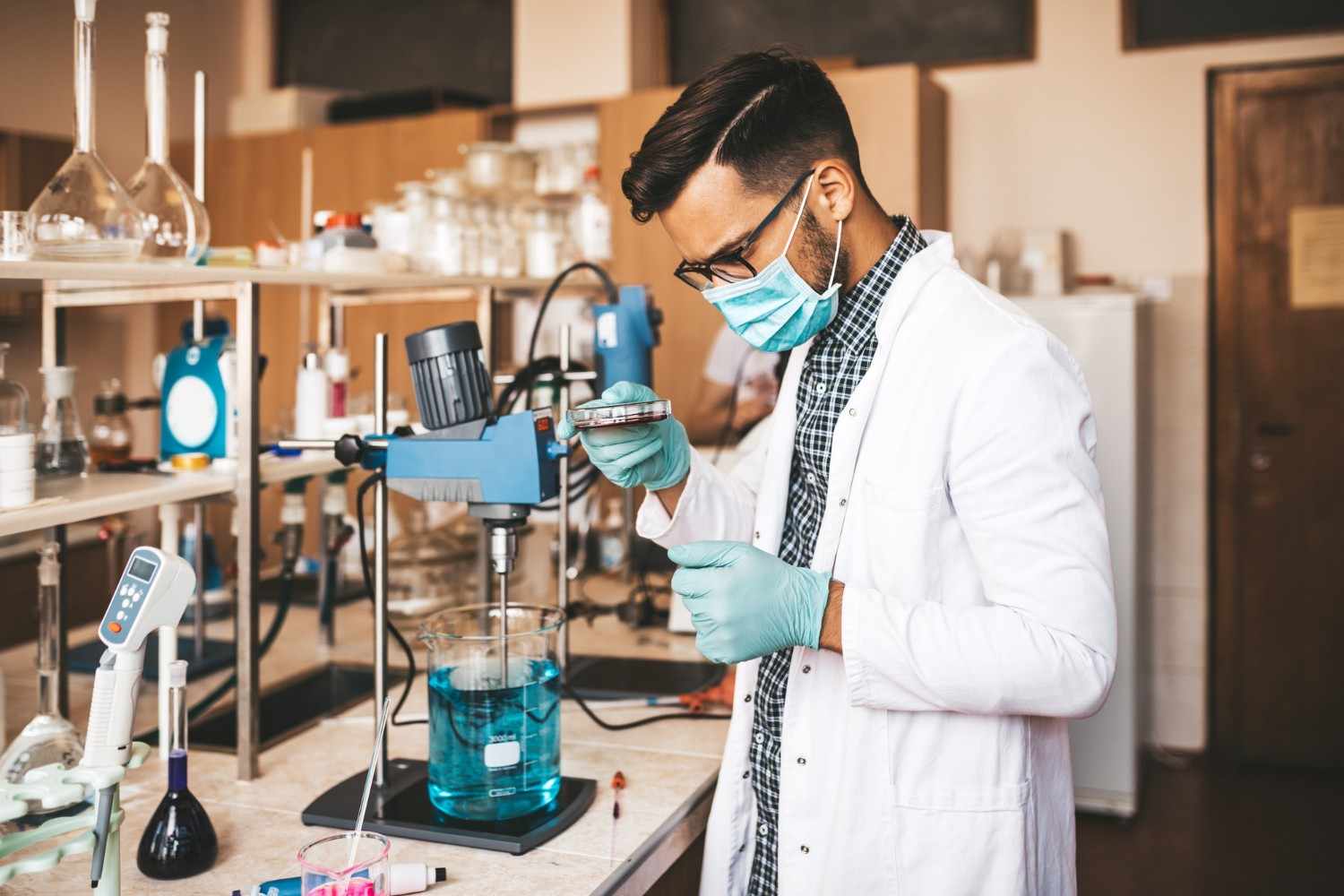
Once the formulation is approved, the ingredients are blended together in a process known as mixing and homogenization. This is where the active pharmaceutical ingredient is combined with the ointment base to create a smooth, uniform mixture. The process involves high-speed mixers and homogenizers that ensure the ointment is evenly blended without any clumping or separation.

Temperature control is crucial during this stage. Ointments with heat-sensitive ingredients require precision handling to avoid degrading the active components.

3. Sterilization

Sterility is critical, especially for ointments that are applied to sensitive areas such as the eyes or open wounds. The manufacturing environment must be free from contaminants, and strict GMP (Good Manufacturing Practices) protocols are followed to maintain hygiene and safety. Sterilization techniques include the use of high-temperature heating or filtration, depending on the nature of the ingredients and the final product.

4. Filling and Packaging

Once the ointment is prepared, it is transferred into sterile containers such as tubes, jars, or other packaging formats. Automated machines ensure precise filling and sealing, guaranteeing that each package contains the correct amount of product. Ointment packaging is typically designed to be airtight to preserve the product’s stability and prevent contamination after opening.

5. Quality Control

Each batch of ointments undergoes rigorous quality control testing. This includes checking for consistency in texture, ensuring proper concentration of the active ingredients, and testing for stability under different conditions. The pH balance, viscosity, and spreadability are also examined to make sure the product is effective and comfortable for the end user.

India’s Role in Ointment Manufacturing

India has emerged as a global leader in the pharmaceutical industry, and ointment manufacturing is no exception. With a vast network of manufacturing facilities and a skilled workforce, the country produces high-quality topical treatments at competitive prices, making it a key player in the global market. According to the Indian Brand Equity Foundation (IBEF), India supplies 50% of the world’s demand for various vaccines and 40% of generic drugs, including ointments and other topical applications (IBEF, 2022).

Baddi: The Heart of Ointment Manufacturing in India

Nestled in the foothills of Himachal Pradesh, Baddi is widely regarded as the pharmaceutical hub of India. It is home to hundreds of pharmaceutical companies, many of which specialize in ointment production. Ointment manufacturers in Baddi benefit from world-class infrastructure, government support, and a favorable regulatory environment, allowing them to produce high-quality products for both domestic and international markets.

Many ointment manufacturing companies in India operate in Baddi due to the region’s strategic location, low production costs, and access to a highly skilled workforce. Additionally, Baddi’s proximity to key markets within India and easy access to export routes has made it a central player in the global pharmaceutical supply chain.

Market Trends and Industry Insights

  • Growing Demand: The global demand for topical treatments, including ointments, is on the rise. According to a report by Grand View Research, the global market for topical drug delivery systems is expected to grow at a CAGR of 9.1% from 2021 to 2028, driven by the increasing prevalence of dermatological diseases and the growing geriatric population (Grand View Research, 2021).
  • Innovations in Ointment Bases: Advances in formulation technology have led to the development of new ointment bases that offer improved absorption and bioavailability. For instance, researchers are exploring the use of nanoemulsions and liposomal carriers to enhance the delivery of active ingredients through the skin barrier.
  • Sustainability in Manufacturing: As environmental concerns become more prominent in the pharmaceutical industry, many ointment manufacturers are adopting sustainable practices. This includes reducing energy consumption during production, minimizing waste, and using eco-friendly packaging materials.

Challenges in Ointment Manufacturing

While India is a leading player in the ointment manufacturing industry, the sector faces several challenges:

  • Regulatory Compliance: Meeting the regulatory requirements of various countries is a complex and time-consuming process. Ointment manufacturers in India must navigate the stringent quality standards set by international bodies such as the USFDA, WHO, and EMA.
  • Supply Chain Disruptions: The global supply chain for pharmaceutical raw materials has been significantly impacted by events such as the COVID-19 pandemic. Ensuring a consistent supply of high-quality ingredients is critical to maintaining production.
  • Formulation Stability: Developing stable formulations, especially for heat-sensitive APIs, is a challenge in ointment manufacturing. Manufacturers must invest in advanced R&D to create products that maintain their efficacy under different environmental conditions.

The Future of Ointment Manufacturing

The future of ointment manufacturing in India is bright, with continued investments in research and development, technological innovation, and sustainability practices. Ointment manufacturers are exploring new formulations that enhance drug absorption, improve patient compliance, and offer longer shelf life.

In particular, ointment manufacturing companies in India are expected to focus on:

  • Personalized Medicine: Tailoring ointments to individual needs, particularly for chronic skin conditions.
  • Advanced Drug Delivery Systems: Incorporating nanotechnology and transdermal systems to improve the efficacy of ointments.
  • Green Manufacturing: Reducing the environmental impact of production by adopting cleaner processes and materials.

India’s pharmaceutical industry continues to expand its influence on the global stage, and ointment manufacturers are at the forefront of this growth. With Baddi serving as a major hub, ointment manufacturing companies in India are well-positioned to meet the increasing global demand for high-quality, affordable topical treatments.

Whether it’s a soothing skin cream or a life-saving medicated ointment, the science and innovation behind every tube or jar are a testament to India’s leadership in pharmaceutical manufacturing. As the industry continues to evolve, India’s ointment manufacturers will remain key players in delivering effective, safe, and innovative solutions to patients worldwide.


References:

  1. IBEF (2022). “Indian Pharmaceutical Industry Overview.” Indian Brand Equity Foundation.
  2. Grand View Research (2021). “Topical Drug Delivery Systems Market Size & Trends Analysis.”
  3. Niazi, S. (2019). Handbook of Pharmaceutical Manufacturing Formulations. CRC Press.
Related Blogs

The 2026 Resilience Mandate: Why Global BioTechs are Rethinking Partnerships

The 2026 Resilience Mandate: Why Global BioTechs are Rethinking Partnerships

In the pharmaceutical industry, we are entering a phase where resilience matters more than speed alone. For years, the focus was on how fast a product could reach the market. Today, the conversation has shifted toward who can remain standing and deliver when the global landscape becomes unpredictable. Predictability is no longer a “nice-to-have”; it has become the ultimate competitive advantage. As I shared in my recent post on Linkedin, global BioTech companies are moving away from viewing CDMOs as mere manufacturing vendors. They are seeking strategic anchors — partners capable of ensuring continuity and long-term reliability in uncertain markets. Beyond Transactional Manufacturing The shift we are seeing is a move toward Industrial Diplomacy. It is no longer enough to offer a “corporate brochure” list of services. True partnership requires a disruptive manufacturing narrative that emphasizes expertise and stability over generic volume. When we talk about resilience at Theon, we are looking at four specific pillars: Continuity and Scalability: Being a global manufacturing anchor means having the financial and production stability to absorb supply chain volatility without breaking. Uncompromising Compliance: Quality standards like PICs and EU-GMP are not just badges; they are the foundation of trust required to operate in high-stakes healthcare sectors. Complex Formulation Capabilities: Resilience is also about R&D empathy. We prioritize patient-centricity and the ability to handle complex formulations rather than just chasing simple high-volume orders. Internal Strength: A resilient ecosystem is built from the inside out. Programs like our “Transfer of Wisdom” mentorship ensure we reduce churn and build leadership that can sustain these partnerships for decades. The Future of the Ecosystem The future of pharma manufacturing will be driven by resilient ecosystems, not transactional relationships. We are moving toward a model where the partner’s internal brand strength and technical depth are just as important as their physical output. As we look toward the remainder of 2026, our focus remains on being that reliable anchor. We aren’t just making medicine; we are securing the supply chains that keep global health moving. Amit Bansal Managing Director, Theon Pharmaceuticals Ltd.

Read More
The Heartbeat of Manufacturing: Why Complex Molecules Demand More Than Just Machinery.

The Heartbeat of Manufacturing: Why Complex Molecules Demand More Than Just Machinery.

Introduction: The Hardware Illusion If you walk the floors of any standard Contract Development and Manufacturing Organization (CDMO) today, the narrative sounds identical: square footage, machine RPMs, and sheer volume. The pharmaceutical manufacturing industry has allowed itself to be commoditized into a hardware business. But when you are tasked with scaling complex, life-saving molecules, treating your manufacturer as a mere “vendor of machinery” is a critical strategic error. At THEON PHARMA, we believe that while anyone with capital can buy a tablet press or a sterile cleanroom, it takes profound intellectual rigor and human empathy to engineer true healthcare. Here is the reality behind manufacturing complex molecules—and the myths we need to leave behind. The 3 Dangerous Myths of Pharma Manufacturing To build an Atmanirbhar supply chain that global brands can trust, we must first dismantle the industry’s most common misconceptions: Myth 1: “Maximum capacity is the ultimate metric of a good CDMO.” The Reality: Scale without uncompromising governance is a liability waiting to happen. Producing volume is easy; producing consistent quality at volume is the real challenge. The THEON Approach: Our Nalagarh facility has the capacity to produce a staggering 2,000 Million tablets annually. But that number is meaningless without our WHO-GMP and EU-GMP compliance frameworks. True manufacturing leadership isn’t just about how fast the machines run; it’s about the “Right & Shared” retention of senior scientists and QA/QC teams who govern those machines to ensure every single tablet is flawless. Myth 2: “Sterile manufacturing just means having a state-of-the-art cleanroom.” The Reality: “Sterile” is not a room; it is a culture of absolute human discipline. The THEON Approach: A critical care patient receiving a sterile injectable has zero margin for error. Behind the 120 Million annual vial/ampoule capacity and ISO Class 5 cleanrooms at our Dera Bassi plant are people who understand the gravity of their work. We train our teams to treat every vial as if it were destined for their own family. The precision of the machine must be driven by the empathy of the human. Myth 3: “Securing the lowest bidder is a strategic procurement win.” The Reality: In the CDMO sector, a race to the bottom on price is a race to compromise patient safety. The lowest bidder is often the highest risk to your brand equity. The THEON Approach: Formulating complex therapies—like heavily segregated Beta-Lactam antibiotics (Penicillins & Cephalosporins) to prevent cross-contamination—is capital-intensive. We fiercely protect our partners by refusing to cut corners to win a price war. We don’t aim to be the cheapest; we aim to be the anchor that geopolitically de-risks your supply chain. The Empathy of R&D: The Story Behind the Molecule Innovation without empathy is just chemistry. Consider the recent success of our DSIR-approved R&D team in securing DCGI permission for the Linagliptin 5mg + Dapagliflozin 10mg tablet. For a standard manufacturer, this is simply a new product code to be processed. For THEON PHARMA, this formulation represents millions of diabetic patients regaining control over their daily lives, their diet, and their longevity. The intricate Phase III clinical success wasn’t just a regulatory hurdle cleared; it was a promise kept to the patient community. When you develop complex molecules for chronic conditions, the manufacturing process cannot be divorced from the patient’s reality. The heartbeat of the patient must dictate the heartbeat of the manufacturing floor. The Assertion: Stop Outsourcing. Start Anchoring. The era of centralized, single-source manufacturing is over. As global pharmaceutical brands look to India to engineer their supply chain resilience for 2026 and beyond, the criteria for choosing a partner must evolve. Do not just audit a facility’s steel and concrete. Audit their heart. Audit their commitment to their people, their environment (like our ISO 14001:2015 certified ETP/STP facilities in Nalagarh), and their unwavering obsession with the patient at the end of the supply chain. THEON PHARMA isn’t just fulfilling contracts; we are engineering the foundation of global healthcare. Partner with the manufacturer that cares as much about your brand—and your patients—as you do.

Read More
theon blog

The Myth of the “Automated” CDMO: Why I’m Relying on Human Friction to Scale By: Amit Bansal, Managing Director, THEON Group of Companies

I’m struggling with the current obsession over automation in the Indian pharma sector. Every week, another CDMO announces a new “fully automated” facility. Zero human intervention. Robotic arms. AI-driven tech transfers. The industry consensus is that if we can just remove the human element, we remove the risk. I disagree with the consensus. I suspect we are just building highly efficient machines that can scale a failed batch faster than ever before. When you scale a manufacturing footprint to handle 120 million sterile liquid vials—like we are currently doing at THEON Lifesciences in Derabassi—the machines aren’t the bottleneck. The machines do exactly what they are told. That is the problem. The Boardroom Friction Last week, we were reviewing the tech transfer for a highly complex, temperature-sensitive CNS formulation. The data from the automated lyophilization cycle looked perfect on the dashboard. It was green across the board. Our senior QA lead halted the transfer anyway. She didn’t like the ambient humidity variance in the staging area just outside the ISO Class 5 cleanroom. The software said it was within acceptable limits. Her ten years of floor experience said it was a disaster waitingto happen. We lost two days of production time running secondary validations. She was right. The software missed a micro-variance that would have triggered a massive OOS (Out of Specification) failure upon commercial scale-up. This is the reality of the CDMO war today. Global drug shortages aren’t happening because we lack compounding tanks. They are happening because USFDA and EMA inspectors are handing out record numbers of Form 483s for ALCOA+ data integrity failures. In 2025 alone, we saw warning letters spike precisely in facilities that over-relied on automated data logging without rigorous human oversight. The “Human Interface” is a Feature, Not a Bug The prevailing myth is that human error is the enemy of sterile manufacturing. Human apathy is the enemy. Human friction is the safeguard. You cannot automate the paranoid, obsessive intuition of a seasoned microbiologist. You cannot write an algorithm that replaces a QC analyst’s willingness to argue with a Plant Head over a marginal test result. As we scale our R&D operations and commercial manufacturing lines this financial year, I am not interested in a frictionless environment. Friction means someone is paying attention. We are investing heavily in what we call the Transfer of Wisdom. It is our internal mentorship architecture. We are deliberately taking our most argumentative, battle-tested senior scientists and pairing them with our new walk-in hires. We aren’t teaching these 24-year-olds how to read an HPLC output. The machine does that. We are teaching them that they hold the absolute authority to stop a 5-million rupee production run if their gut tells them the data doesn’t add up. The Reality of Scale Yes, the “China Plus One” geopolitical shift is pushing unprecedented volume to India. Yes, we have built the 120M vial capacity, the zero-skin-exposure lines, and the PIC/S compliant infrastructure to capture it. But capacity is just steel and code. If you are a Supply Chain Director looking for a CDMO to anchor your FY26 portfolio, stop asking your vendors about their robotic capabilities. Start asking them about their culture of pushback. Ask them how many times their QA department halted production last month. If the answer is zero, walk away. We are scaling our technology. But we are anchoring our survival on the human interface.

Read More