
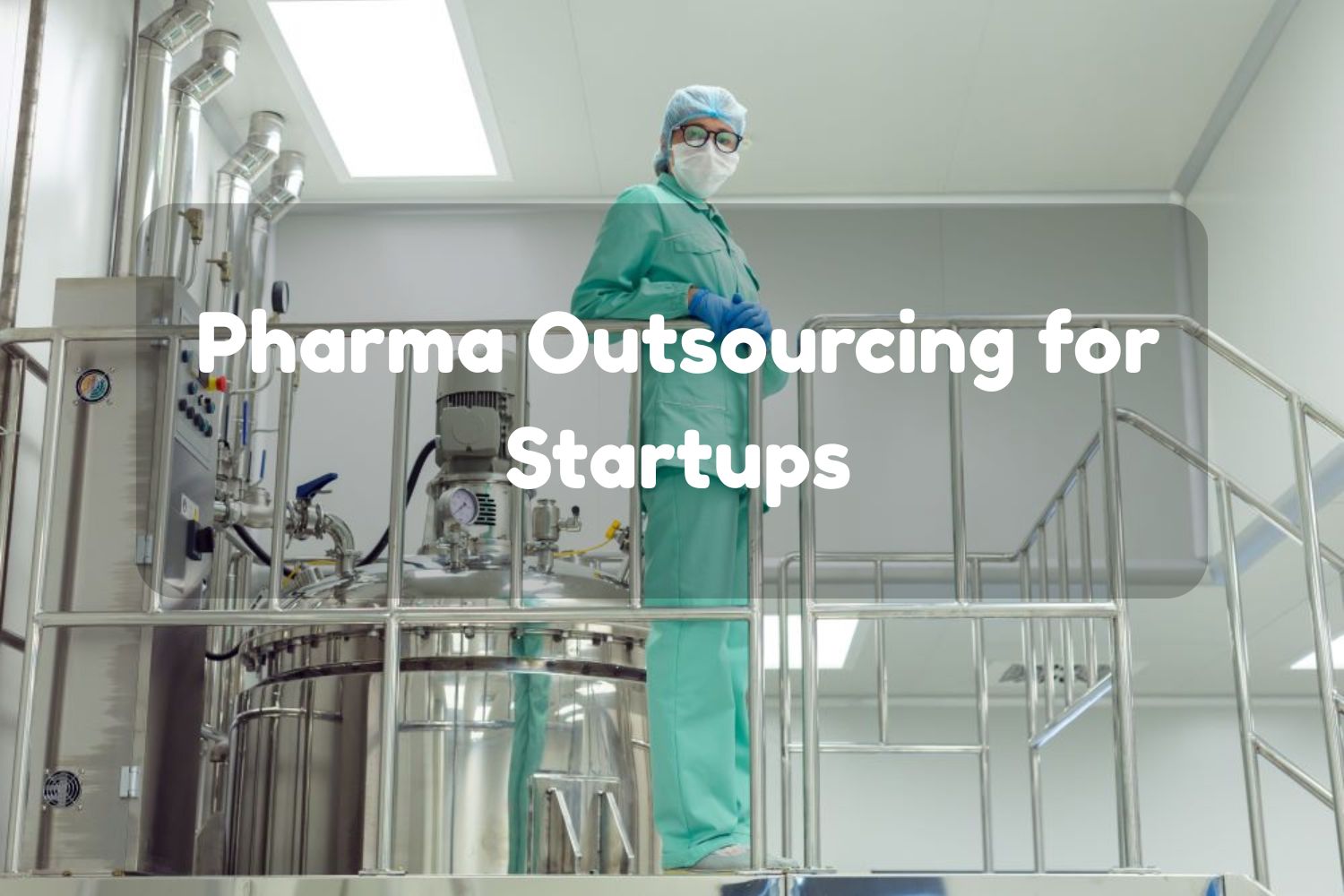
10 Key Benefits of Pharma Outsourcing for Startups and New Brands

Pharma Outsourcing

Starting a pharmaceutical brand is exciting, but it also comes with many challenges. From setting up manufacturing units to following strict regulatory rules, the journey can be complex and expensive. This is where Pharma Outsourcing becomes a smart and practical solution for startups and new brands.

Instead of investing heavily in infrastructure, equipment, and skilled manpower, many new pharma companies choose to outsource manufacturing and related services to experienced partners like Theon Pharma. This approach allows brands to focus on growth, marketing, and customer trust while experts handle production.

What Is Pharma Outsourcing?

Pharma Outsourcing means hiring a third-party pharmaceutical company to handle manufacturing, packaging, testing, or even regulatory support. These third-party manufacturers already have approved facilities, trained staff, and quality systems in place.

For startups, this model reduces risk, saves time, and ensures high-quality medicines without heavy investments.

1. Low Initial Investment

One of the biggest benefits of Pharma Outsourcing is the reduced startup cost.

Setting up a pharma manufacturing plant requires:

  • Expensive machinery
  • Large factory space
  • Skilled technical staff
  • Licenses and approvals

For new brands, this investment can be overwhelming. By outsourcing to a company like Theon Pharma, startups can launch products without spending crores on infrastructure. This allows better use of capital for branding, sales, and distribution.

2. Faster Market Entry

Time is very important in the pharmaceutical industry. Delays in product launch can mean lost opportunities.

With Pharma Outsourcing:

  • Manufacturing facilities are already operational
  • Regulatory approvals are in place
  • Production can start quickly

3. Access to GMP-Certified Facilities

Quality is non-negotiable in pharmaceuticals. Outsourcing partners usually operate in GMP-certified plants, ensuring that every product meets strict quality standards.

Benefits include:

  • Consistent product quality
  • Compliance with national and international guidelines
  • Better brand credibility

4. Regulatory Compliance Made Easy

Pharma regulations are complex and frequently updated. For new brands, managing compliance can be confusing and risky.

Pharma Outsourcing partners help with:

  • Drug licenses
  • Product registrations
  • Documentation and audits
  • Quality checks

5. Focus on Core Business Activities

When startups outsource manufacturing, they free themselves from operational stress.

This allows them to focus on:

  • Brand building
  • Sales and marketing
  • Market expansion
  • Doctor and distributor relationships

Instead of worrying about production issues, new brands can invest their energy in growing their business. Pharma Outsourcing gives startups the freedom to concentrate on what truly matters.

6. Flexible Production Capacity

Demand can change quickly in the pharma market. Some products sell fast, while others grow slowly.

With Pharma Outsourcing:

  • Production can be increased or reduced easily
  • No worry about idle machinery
  • Better inventory management

7. Access to Technical Expertise

Experienced pharma manufacturers have skilled professionals who understand formulation development, stability testing, and quality control.

Through Pharma Outsourcing, startups gain access to:

  • R&D expertise
  • Formulation improvement
  • Advanced manufacturing techniques

8. Reduced Operational Risk

Running a manufacturing unit involves risks such as:

  • Equipment failure
  • Compliance issues
  • Quality deviations

By outsourcing, these risks are transferred to the manufacturing partner. This protects startups from unexpected losses and operational challenges.

9. Wide Range of Product Options

Many outsourcing partners offer multiple dosage forms under one roof, such as:

  • Tablets and capsules
  • Ointments and creams
  • Syrups and suspensions
  • Injections

10. Better Brand Trust and Market Reputation

When products are manufactured in certified facilities and meet quality standards, it builds trust among doctors, distributors, and patients.

Pharma Outsourcing helps new brands:

  • Deliver consistent quality
  • Maintain supply reliability
  • Build long-term credibility

Partnering with an established manufacturer like Theon Pharma adds value to your brand name and improves market acceptance.

Why Startups Prefer Pharma Outsourcing Today

In today’s competitive market, startups need smart strategies to survive and grow. Pharma Outsourcing offers a balanced approach by combining quality, cost efficiency, and speed.

Instead of taking financial risks, new brands can leverage the experience and infrastructure of established manufacturers. This model has helped many startups turn into successful pharma companies.

Why Choose Theon Pharma for Pharma Outsourcing?

Theon Pharma is a trusted name in pharmaceutical manufacturing, known for quality, compliance, and reliability. For startups and new brands, Theon Pharma offers:

  • GMP-compliant manufacturing facilities
  • High-quality formulations
  • Regulatory support
  • Timely production and delivery
  • Transparent processes

With a strong focus on quality and customer satisfaction, Theon Pharma is an ideal Pharma Outsourcing partner for growing pharmaceutical brands.

Frequently Asked Questions

1. What is Pharma Outsourcing?

Pharma Outsourcing is the process of hiring a third-party manufacturer to handle pharmaceutical production, packaging, and compliance activities.

2. Is Pharma Outsourcing suitable for new pharma brands?

Yes, it is ideal for startups as it reduces investment, speeds up product launch, and ensures quality manufacturing.

3. How does Pharma Outsourcing reduce costs?

It removes the need for factory setup, machinery purchase, and large staff, saving significant capital.

4. Can outsourced products meet quality standards?

Yes, when manufactured in GMP-certified facilities like those at Theon Pharma, products meet strict quality and safety standards.

5. Does Theon Pharma support regulatory compliance?

Yes, Theon Pharma provides strong regulatory and documentation support to help brands meet legal requirements.

6. Can I expand my product range through Pharma Outsourcing?

Absolutely. Outsourcing allows easy addition of new products without extra infrastructure investment.

7. Is Pharma Outsourcing safe for long-term business growth?

Yes, it is a proven and scalable model used by many successful pharma companies worldwide.

Related Blogs

The Heartbeat of Manufacturing: Why Complex Molecules Demand More Than Just Machinery.

The Heartbeat of Manufacturing: Why Complex Molecules Demand More Than Just Machinery.

Introduction: The Hardware Illusion If you walk the floors of any standard Contract Development and Manufacturing Organization (CDMO) today, the narrative sounds identical: square footage, machine RPMs, and sheer volume. The pharmaceutical manufacturing industry has allowed itself to be commoditized into a hardware business. But when you are tasked with scaling complex, life-saving molecules, treating your manufacturer as a mere “vendor of machinery” is a critical strategic error. At THEON PHARMA, we believe that while anyone with capital can buy a tablet press or a sterile cleanroom, it takes profound intellectual rigor and human empathy to engineer true healthcare. Here is the reality behind manufacturing complex molecules—and the myths we need to leave behind. The 3 Dangerous Myths of Pharma Manufacturing To build an Atmanirbhar supply chain that global brands can trust, we must first dismantle the industry’s most common misconceptions: Myth 1: “Maximum capacity is the ultimate metric of a good CDMO.” The Reality: Scale without uncompromising governance is a liability waiting to happen. Producing volume is easy; producing consistent quality at volume is the real challenge. The THEON Approach: Our Nalagarh facility has the capacity to produce a staggering 2,000 Million tablets annually. But that number is meaningless without our WHO-GMP and EU-GMP compliance frameworks. True manufacturing leadership isn’t just about how fast the machines run; it’s about the “Right & Shared” retention of senior scientists and QA/QC teams who govern those machines to ensure every single tablet is flawless. Myth 2: “Sterile manufacturing just means having a state-of-the-art cleanroom.” The Reality: “Sterile” is not a room; it is a culture of absolute human discipline. The THEON Approach: A critical care patient receiving a sterile injectable has zero margin for error. Behind the 120 Million annual vial/ampoule capacity and ISO Class 5 cleanrooms at our Dera Bassi plant are people who understand the gravity of their work. We train our teams to treat every vial as if it were destined for their own family. The precision of the machine must be driven by the empathy of the human. Myth 3: “Securing the lowest bidder is a strategic procurement win.” The Reality: In the CDMO sector, a race to the bottom on price is a race to compromise patient safety. The lowest bidder is often the highest risk to your brand equity. The THEON Approach: Formulating complex therapies—like heavily segregated Beta-Lactam antibiotics (Penicillins & Cephalosporins) to prevent cross-contamination—is capital-intensive. We fiercely protect our partners by refusing to cut corners to win a price war. We don’t aim to be the cheapest; we aim to be the anchor that geopolitically de-risks your supply chain. The Empathy of R&D: The Story Behind the Molecule Innovation without empathy is just chemistry. Consider the recent success of our DSIR-approved R&D team in securing DCGI permission for the Linagliptin 5mg + Dapagliflozin 10mg tablet. For a standard manufacturer, this is simply a new product code to be processed. For THEON PHARMA, this formulation represents millions of diabetic patients regaining control over their daily lives, their diet, and their longevity. The intricate Phase III clinical success wasn’t just a regulatory hurdle cleared; it was a promise kept to the patient community. When you develop complex molecules for chronic conditions, the manufacturing process cannot be divorced from the patient’s reality. The heartbeat of the patient must dictate the heartbeat of the manufacturing floor. The Assertion: Stop Outsourcing. Start Anchoring. The era of centralized, single-source manufacturing is over. As global pharmaceutical brands look to India to engineer their supply chain resilience for 2026 and beyond, the criteria for choosing a partner must evolve. Do not just audit a facility’s steel and concrete. Audit their heart. Audit their commitment to their people, their environment (like our ISO 14001:2015 certified ETP/STP facilities in Nalagarh), and their unwavering obsession with the patient at the end of the supply chain. THEON PHARMA isn’t just fulfilling contracts; we are engineering the foundation of global healthcare. Partner with the manufacturer that cares as much about your brand—and your patients—as you do.

Read More
theon blog

The Myth of the “Automated” CDMO: Why I’m Relying on Human Friction to Scale By: Amit Bansal, Managing Director, THEON Group of Companies

I’m struggling with the current obsession over automation in the Indian pharma sector. Every week, another CDMO announces a new “fully automated” facility. Zero human intervention. Robotic arms. AI-driven tech transfers. The industry consensus is that if we can just remove the human element, we remove the risk. I disagree with the consensus. I suspect we are just building highly efficient machines that can scale a failed batch faster than ever before. When you scale a manufacturing footprint to handle 120 million sterile liquid vials—like we are currently doing at THEON Lifesciences in Derabassi—the machines aren’t the bottleneck. The machines do exactly what they are told. That is the problem. The Boardroom Friction Last week, we were reviewing the tech transfer for a highly complex, temperature-sensitive CNS formulation. The data from the automated lyophilization cycle looked perfect on the dashboard. It was green across the board. Our senior QA lead halted the transfer anyway. She didn’t like the ambient humidity variance in the staging area just outside the ISO Class 5 cleanroom. The software said it was within acceptable limits. Her ten years of floor experience said it was a disaster waitingto happen. We lost two days of production time running secondary validations. She was right. The software missed a micro-variance that would have triggered a massive OOS (Out of Specification) failure upon commercial scale-up. This is the reality of the CDMO war today. Global drug shortages aren’t happening because we lack compounding tanks. They are happening because USFDA and EMA inspectors are handing out record numbers of Form 483s for ALCOA+ data integrity failures. In 2025 alone, we saw warning letters spike precisely in facilities that over-relied on automated data logging without rigorous human oversight. The “Human Interface” is a Feature, Not a Bug The prevailing myth is that human error is the enemy of sterile manufacturing. Human apathy is the enemy. Human friction is the safeguard. You cannot automate the paranoid, obsessive intuition of a seasoned microbiologist. You cannot write an algorithm that replaces a QC analyst’s willingness to argue with a Plant Head over a marginal test result. As we scale our R&D operations and commercial manufacturing lines this financial year, I am not interested in a frictionless environment. Friction means someone is paying attention. We are investing heavily in what we call the Transfer of Wisdom. It is our internal mentorship architecture. We are deliberately taking our most argumentative, battle-tested senior scientists and pairing them with our new walk-in hires. We aren’t teaching these 24-year-olds how to read an HPLC output. The machine does that. We are teaching them that they hold the absolute authority to stop a 5-million rupee production run if their gut tells them the data doesn’t add up. The Reality of Scale Yes, the “China Plus One” geopolitical shift is pushing unprecedented volume to India. Yes, we have built the 120M vial capacity, the zero-skin-exposure lines, and the PIC/S compliant infrastructure to capture it. But capacity is just steel and code. If you are a Supply Chain Director looking for a CDMO to anchor your FY26 portfolio, stop asking your vendors about their robotic capabilities. Start asking them about their culture of pushback. Ask them how many times their QA department halted production last month. If the answer is zero, walk away. We are scaling our technology. But we are anchoring our survival on the human interface.

Read More
The Future of Pharma Talent: Why True Retention in Life Sciences Goes Beyond a 9% Hike

The Future of Pharma Talent: Why True Retention in Life Sciences Goes Beyond a 9% Hike

If you picked up 1st April edition of The Economic Times, the front-page headline was impossible to miss: “Salary Hikes Likely to Average Over 9%; Life Sciences to Lead”. The data is clear. The Indian pharmaceutical sector is expanding at a breakneck pace, and as global brands actively pivot to India for their CDMO needs, the industry is fiercely competing for top talent. But as Managing Director, when I look at the aggressive growth path of the THEON Group of Companies, and specifically our state-of-the-art THEON Lifesciences plant in Derabassi, I know a fundamental truth: You cannot build a resilient global supply chain on a fragile, transient workforce fueled solely by the highest bidder. Today, the biggest threat to global supply chain stability isn’t equipment failure or API shortages. It is employee churn, especially in critical Quality Assurance (QA) and Quality Control (QC) roles. The Real Cost of Churn in Sterile Manufacturing In highly regulated sterile manufacturing, losing an experienced QA/QC professional is not just an HR inconvenience; it is a regulatory vulnerability. The time it takes to onboard, train, and validate a new analyst to meet WHO-GMP, EU-GMP, and PIC/S standards is immense. Many companies attempt to solve this “War for Talent” by simply throwing higher salaries at lateral hires—a strategy today’s headlines confirm. However, creating a revolving door of talent across the industry is unsustainable. The “Right & Shared” Retention Strategy To achieve our ambitious vision for TARGET SIDDHI @ 2026, we had to completely rethink retention. We shifted our focus from transactional recruitment to a Right and Shared Retention Strategy. We realized that true retention happens when a company’s growth path and an employee’s career path are fundamentally shared. We call this our Transfer of Wisdom. When we recently appointed our new QC Head, the mandate was not just to manage daily batch releases. The mandate was to act as a career architect. We actively pair our senior, battle-tested scientists with the brilliant young minds joining our walk-in drives. This ensures that the nuanced, tacit knowledge of sterile manufacturing is passed down. We don’t just want our team to execute protocols; we want them to understand the why behind the science. 3 Skills We Are Cultivating for 2026 As we upskill our internal teams across the THEON Group, we are focusing on the competencies that will define the next decade of pharmaceutical manufacturing: 1. ALCOA+ Data Integrity Mastery: It is no longer enough to run the test; you must document it with flawless, unshakeable integrity. 2. Advanced Automation Literacy: With our massive capacity driven by fully automated compounding and lyophilization lines at THEON Lifesciences, our QA/QC teams must be as comfortable auditing software logs as they are operating an HPLC machine. 3. Audit-Readiness as a Mindset: We train our teams to operate every single shift as if a global regulatory inspector is standing right behind them. Engineering Careers, Not Just Formulations Retention is ultimately about providing a pathway to Siddhi (personal and professional achievement). When professionals see that an organization is invested in their upward mobility—not just their annual increment—they don’t just stay. They take ownership. India is stepping up to become the pharmacy of the world by value and resilience. At THEON, we know that to manufacture world-class medicines, we must first manufacture world-class leaders. Explore Your Future With Us: Are you a pharma professional looking for a shared growth path? Explore an organization that is engineering a standard of excellence. The Crisp LinkedIn Promo Post (To Drive Traffic & Followers) Headline: April 1st Economic Times front page confirms it: Life Sciences will lead India’s salary hikes this year at over 9%. 📈 Body: But as we scale the THEON Group of Companies, I can tell you that trying to win the “War for Talent” simply by being the highest bidder is a flawed strategy. In sterile manufacturing, employee churn isn’t just an HR problem—it’s a severe compliance risk. 🛑 In my latest article, I share why we are moving away from the “revolving door” of lateral hiring. At THEON Lifesciences, we are executing a ‘Right & Shared Retention Strategy’ centered around our Transfer of Wisdom mentorship program. We aren’t just adjusting paychecks; we are engineering long-term career paths. Read how we are upskilling the next generation of global pharma leaders: 👇 If you are passionate about the future of Indian Pharma and building resilient work cultures, hit ‘Follow’ on my profile for weekly leadership insights, and explore our capabilities at www.theonpharma.com. #PharmaCareers #LifeSciences #TalentRetention #EconomicTimes #TheonGroup #TheonLifesciences #QualityControl #Employability #AmitBansal #PharmaLeadership #MakeInIndia #Siddhi2026

Read More